25 Small Fine Line Rose Tattoo Ideas for Women

Discover elegant fine line rose tattoo ideas, including minimalist wrist designs, delicate ankle placements, and meaningful floral combinations.

A fine-line rose can feel romantic, resilient, understated, or deeply personal. This guide brings together 25 wearable concepts, practical placement notes, and artist-ready details to help you move from inspiration to a design that still feels like yours.
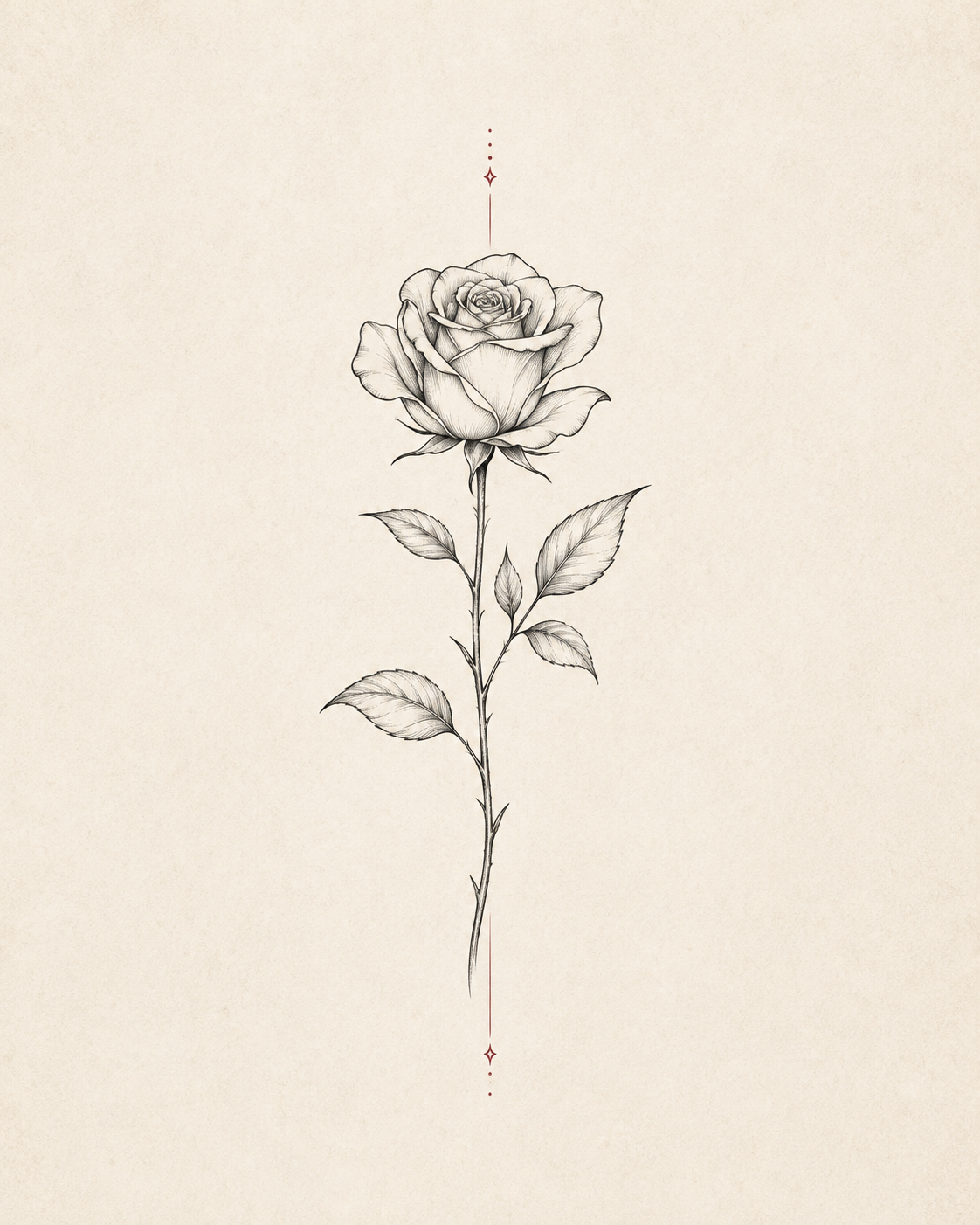
Original fine line rose tattoo flash illustration
Original editorial illustration created for TattoosIdeas.ink. Use it as a design starting point, then ask your artist for an original composition.
Editorial note: Use these concepts as a starting point, not a stencil. A skilled tattoo artist can adapt the line weight, scale, and anatomy to your skin and placement.

25 small fine-line rose tattoo ideas

1

Single-stem rose

Design direction: Use this concept as a starting point, then work with an artist on an original composition that suits your placement and skin.

A clean stem with one lightly outlined bloom. Elegant on the inner forearm or upper arm.

2

Tiny wrist rose

Design direction: Use this concept as a starting point, then work with an artist on an original composition that suits your placement and skin.

A compact bud placed slightly above the wrist crease so movement does not distort the design.

3

Behind-the-ear bloom

Design direction: Use this concept as a starting point, then work with an artist on an original composition that suits your placement and skin.

A subtle rosebud that follows the curve behind the ear; best kept simple for clarity.

4

Ankle rose sprig

Design direction: Use this concept as a starting point, then work with an artist on an original composition that suits your placement and skin.

A slim stem angled along the ankle bone for a delicate, elongated silhouette.

5

Rose and crescent moon

Design direction: Use this concept as a starting point, then work with an artist on an original composition that suits your placement and skin.

A small bloom paired with a fine crescent for a soft celestial theme.

6

One-line rose

Design direction: Use this concept as a starting point, then work with an artist on an original composition that suits your placement and skin.

A continuous-line interpretation with an airy, contemporary finish.

7

Rose with initials

Design direction: Use this concept as a starting point, then work with an artist on an original composition that suits your placement and skin.

Small initials woven into the stem for a discreet memorial or relationship piece.

8

Collarbone rose

Design direction: Use this concept as a starting point, then work with an artist on an original composition that suits your placement and skin.

A horizontal stem that follows the natural collarbone line without crowding it.

9

Micro rosebud

Design direction: Use this concept as a starting point, then work with an artist on an original composition that suits your placement and skin.

A pared-back bud using very few lines; ask your artist how small it can age legibly.

10

Rose and butterfly

Design direction: Use this concept as a starting point, then work with an artist on an original composition that suits your placement and skin.

A tiny butterfly hovering beside the bloom to suggest growth and transformation.

11

Side-rib rose

Design direction: Use this concept as a starting point, then work with an artist on an original composition that suits your placement and skin.

A vertical sprig that moves naturally with the torso; expect a more sensitive session.

12

Finger-side rose

Design direction: Use this concept as a starting point, then work with an artist on an original composition that suits your placement and skin.

A minimal stem on the side of a finger—beautiful but more prone to fading and touch-ups.

13

Rose with birth date

Design direction: Use this concept as a starting point, then work with an artist on an original composition that suits your placement and skin.

A fine date beneath the stem, set in simple numerals for readability.

14

Abstract geometric rose

Design direction: Use this concept as a starting point, then work with an artist on an original composition that suits your placement and skin.

Soft petals contrasted with a circle, triangle, or single architectural line.

15

Rose and bee

Design direction: Use this concept as a starting point, then work with an artist on an original composition that suits your placement and skin.

A small bee adds movement and a theme of devotion, community, or perseverance.

16

Spine rose

Design direction: Use this concept as a starting point, then work with an artist on an original composition that suits your placement and skin.

A narrow vertical design centered along the upper or lower spine.

17

Rose bracelet

Design direction: Use this concept as a starting point, then work with an artist on an original composition that suits your placement and skin.

A partial botanical band that leaves breathing room instead of wrapping too densely.

18

Red-ink accent rose

Design direction: Use this concept as a starting point, then work with an artist on an original composition that suits your placement and skin.

Mostly black fine line with one restrained red accent in a petal or thorn.

19

Rose and name script

Design direction: Use this concept as a starting point, then work with an artist on an original composition that suits your placement and skin.

A short name shaped into the stem; keep the lettering large enough to heal clearly.

20

Shoulder-cap rose

Design direction: Use this concept as a starting point, then work with an artist on an original composition that suits your placement and skin.

A small bloom positioned to follow the round contour of the shoulder.

21

Rose with thorns

Design direction: Use this concept as a starting point, then work with an artist on an original composition that suits your placement and skin.

Delicate thorns add contrast and can symbolize beauty, protection, and resilience.

22

Matching rosebuds

Design direction: Use this concept as a starting point, then work with an artist on an original composition that suits your placement and skin.

Related—not necessarily identical—buds for sisters, friends, or partners.

23

Rose and constellation

Design direction: Use this concept as a starting point, then work with an artist on an original composition that suits your placement and skin.

A minimal star pattern placed around the flower for a personal zodiac reference.

24

Botanical rose cluster

Design direction: Use this concept as a starting point, then work with an artist on an original composition that suits your placement and skin.

One rose with two or three tiny leaves, giving detail without making the tattoo feel busy.

25

Falling petal rose

Design direction: Use this concept as a starting point, then work with an artist on an original composition that suits your placement and skin.

A bloom with one drifting petal to suggest change, memory, or a new chapter.

Choose the right placement and size

Fine-line work depends on clean spacing. Very tiny details may soften as skin naturally changes, so let the artist recommend a size that protects the silhouette. Explore more inspiration in our minimalist tattoos, small tattoos, and fine-line tattoos collections.

PlacementVisibilityPractical note
Inner forearmEasy to show or coverGood canvas for a 5–10 cm stem
Wrist/ankleVisibleAvoid placing intricate detail directly on a crease
RibsPrivateMore movement and sensitivity during tattooing
Finger/handHighly visibleOften fades faster and may need maintenance
ShoulderFlexibleWorks well with the body’s natural curve

How to brief your tattoo artist

  • Bring two or three references and identify exactly what you like in each.
  • Explain the feeling you want—delicate, botanical, graphic, romantic, or resilient.
  • Discuss healed examples of the artist’s fine-line work, not only fresh tattoos.
  • Ask about minimum readable size, line spacing, placement, and likely touch-ups.
  • Request an original composition rather than an exact copy of someone else’s tattoo.

Healing and aftercare

Follow your artist’s instructions first. In general, keep the area clean, avoid picking or scratching, protect healing skin from prolonged water exposure, and use sun protection after it has healed. For medically reviewed guidance, see the American Academy of Dermatology’s tattooed-skin advice and the FDA’s tattoo safety overview. Seek medical advice if you notice spreading redness, worsening pain, fever, or other signs of infection.

Frequently asked questions

Do fine-line rose tattoos fade faster?

All tattoos change over time. Extremely small details and areas exposed to friction or sun can lose definition sooner, which is why size, placement, technique, and aftercare matter.

How small can a rose tattoo be?

There is no universal minimum. The safe size depends on the number of petals, line spacing, placement, and the artist’s technique. Prioritize a design that will remain readable when healed.

What does a rose tattoo symbolize?

Common associations include love, beauty, remembrance, balance, and resilience. Thorns, color, names, or dates can make the meaning more personal.

Ready to refine your idea?

Save your favorite concepts, choose a placement, and take your notes to a reputable artist. For editorial questions or collaboration inquiries, contact TattoosIdeas.