Physical Address
304 North Cardinal St.
Dorchester Center, MA 02124
Physical Address
304 North Cardinal St.
Dorchester Center, MA 02124

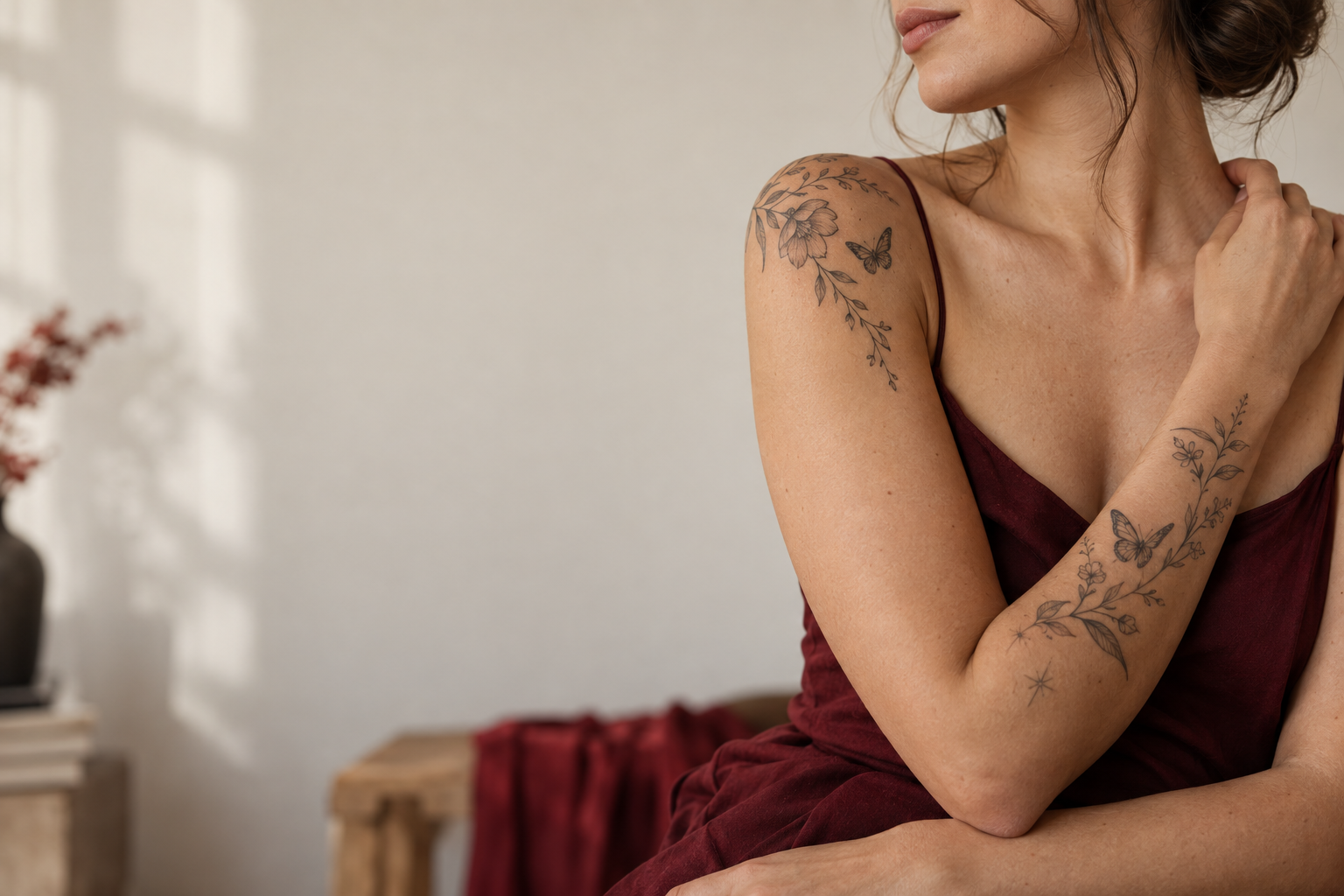
Fine line botanical tattoos are a natural choice for anyone who wants a design that feels detailed without looking heavy. Flowers, leaves, branches and small insects can be adapted to very small placements or expanded into a flowing arm, rib, shoulder or back composition. The best result is not simply the prettiest reference image: it is a design that suits your body, your taste and the amount of detail your artist can execute at the chosen scale.
This guide is for planning inspiration before you meet a professional tattoo artist. It explains what makes fine line botanical tattoos work, which placements deserve consideration, and how to make a design choice that can still feel intentional years from now.
Fine line describes a technique rather than one subject. The artist uses delicate outlines, restrained shading and carefully controlled negative space instead of bold contours and large areas of solid black. A botanical design might be a single lavender stem, an ornamental rose, an abstract vine, or a group of wildflowers arranged around an existing tattoo.
Because the visual language is quieter, composition matters more. A good fine line piece has a readable silhouette from a normal viewing distance, then rewards a closer look with vein lines, petals or small accents. It should not rely on dozens of tiny marks that only work in a highly edited photo.
Placement changes how a tattoo reads. A stem that looks elegant on a flat illustration may need to curve or become simpler when it wraps around an ankle or follows a forearm. Start with the body area, then let the design grow from that decision.
This is one of the easiest places to view and photograph. A vertical stem, small floral bundle or gentle branch can sit naturally along the arm. It also gives an artist enough room to preserve separation between the major lines.
Rounded anatomy is ideal for a botanical spray because leaves and stems can flow with the body. A shoulder piece can remain minimal from the front and become more detailed toward the back.
These placements suit designs with a clear direction: a branch that follows the collarbone, a small flower beside the sternum, or a longer vine on the rib. They can be visually striking, but pain tolerance, movement and clothing friction are practical factors to discuss with your artist.
Small placements demand restraint. Choose one recognizable element—a leaf, bud, tiny butterfly or simplified flower—rather than shrinking a full bouquet. Fine lines need breathing room, especially in areas that receive frequent sun, movement or washing.
The scale must match the design. A flower can be small, but the artist still needs enough room to distinguish petals from each other. If a design needs a magnified phone screen to make sense, it may be too detailed for the placement.
A useful way to edit an inspiration board is to identify the one or two details that make each example special. It could be the long stem, the round rose shape, the soft dotwork or the way the composition follows an arm. Keep those features and remove the rest. This produces a stronger brief for an artist than asking them to combine five complete tattoos.
Every tattoo needs aftercare, and your artist’s instructions should come first. In general, healing skin should be kept clean, protected from friction and left alone rather than picked or over-moisturized. Once healed, sunscreen is one of the most useful ways to help tattoo contrast stay visible over time.
Fine line work can soften as skin changes. That is normal, and it is one reason spacing and simplified shapes matter. A professional artist can advise whether the reference design needs to be enlarged, opened up or adapted for the area you chose. Avoid treating an online image as a promise that every body and every technique will age identically.
Save references for composition, line weight and placement separately. Label what you like about each one. For example: “I like the open space around the flower,” “I want this kind of stem direction,” or “I prefer a softer outline.” Your artist can use that information to create original work instead of duplicating someone else’s tattoo.
For more starting points, browse our guides to fine line tattoos, tattoo ideas for women and small tattoo ideas. The right tattoo is one that makes sense at your chosen size, fits your life, and feels recognizably yours.
A tattoo reference is most useful when it explains a direction, not when it is treated as a drawing to reproduce exactly. Artists build their reputation through original work, and a botanical idea gives them plenty of room to create something personal. Bring references that show your preferred line weight, flower family, placement and level of contrast. Then explain what you want the tattoo to represent, if there is a story behind it.
Ask the artist to draw the final piece for your body rather than placing a flat image on the skin. They can adjust a stem so it moves with an arm, open up the space between petals, or shift a small insect to keep the main flower from being hidden by a natural crease. These are small choices, but they separate a thoughtful tattoo from a design that only works in a screenshot.
Fine line botanical tattoos can be understated, but they are not an afterthought. Give the artist a clear brief, protect enough space for the design to breathe, and choose a size that lets the essential details stay readable. That approach will give your inspiration a better chance of becoming an original tattoo you are happy to live with.
The most common issue is trying to make every idea fit into one small tattoo. A rose, a birth flower, several names, a butterfly, a quote and a background can each be meaningful, but together they may compete for attention. Start with one focal point and make the supporting details earn their place.
Another mistake is choosing a placement only because it is popular online. A reference photo may use lighting, makeup or a pose that does not reflect how the tattoo appears during everyday movement. Wearable design is about proportion, visibility and your own comfort, not just a trend. A consultation gives you the opportunity to test size and direction with a simple stencil before committing.
Finally, do not let a vague brief create a generic result. A small note about why you chose the flower, what mood you want, or whether the tattoo should feel romantic, graphic, vintage or natural can give an artist a far better starting point.
Editorial note: TattoosIdeas.ink shares visual inspiration and planning information, not medical or professional tattoo advice. Choose a reputable, licensed tattoo professional and follow their individualized guidance.